Hello Explorers!
The Universe has always been so fascinating. Although we think that we have discovered a large part of it and we think that humans have reached the highest state of discovery, the Universe always leaves behind a new mystery every time we look into it.

Did You Know that we are only able to discover 5% of the universe until now and the rest 95% is still unknown. This explains the vastness of the universe to which we are so inferior.
Scientists did not had even a slightest idea about the remaining 95% until the discovery in the year 2012.
DARK MATTER
Dark matter is a hypothetical (until 2012) type of matter distinct from baryonic matter (ordinary matter such as protons and neutrons), neutrinos and dark energy.In easy words (in some cosmological theories) it is a non-luminous material which is postulated to exist in space and which could take either of two forms: weakly interacting particles ( cold dark matter ) or high-energy randomly moving particles created soon after the Big Bang ( hot dark matter ).
Unlike normal matter, dark matter does not interact with the electromagnetic force. This means it does not absorb, reflect or emit light, making it extremely hard to spot.In fact, researchers have been able to infer the existence of dark matter only from the gravitational effect it seems to have on visible matter.Dark matter seems to outweigh visible matter roughly six to one, making up about 25% of the universe.Dark matter candidates arise frequently in theories that suggest physics beyond the Standard Model, such as supersymmetry and extra dimensions. One theory suggests the existence of a “Hidden Valley”, a parallel world made of dark matter having very little in common with matter we know. If one of these theories proved to be true, it could help scientists gain a better understanding of the composition of our universe and, in particular, how galaxies hold together.Although both dark matter and ordinary matter are "matter", they do not behave in the same way. In particular, in the early universe, ordinary matter was ionized and interacted strongly with radiation via Thomson scattering. Dark matter does not interact directly with radiation, but it does affect the CMB by its gravitational potential (mainly on large scales), and by its effects on the density and velocity of ordinary matter. Ordinary and dark matter perturbations therefore evolve differently with time, and leave different imprints on the cosmic microwave background (CMB).
The cosmic microwave background is very close to a perfect Blackbody, but contains very small temperature anisotropies of a few parts in 100,000.
"Motions of the stars tell you how much matter there is," Pieter van Dokkum, a researcher at Yale University, said in a statement. "They don't care what form the matter is, they just tell you that it's there." Van Dokkum led a team that identified the galaxy Dragonfly 44*, which is composed almost entirely of dark matter.
If scientists can't see dark matter, how do they know it exists?
Scientists calculate the mass of large objects in space by studying their motion. Astronomers examining spiral galaxies in the 1950s expected to see material in the center moving faster than on the outer edges. Instead, they found the stars in both locations traveled at the same velocity, indicating the galaxies contained more mass than could be seen. Studies of the gas within elliptical galaxies also indicated a need for more mass than found in visible objects. Clusters of galaxies would fly apart if the only mass they contained were visible to conventional astronomical measurements.
Unlike normal matter, dark matter does not interact with the electromagnetic force. This means it does not absorb, reflect or emit light, making it extremely hard to spot.In fact, researchers have been able to infer the existence of dark matter only from the gravitational effect it seems to have on visible matter.Dark matter seems to outweigh visible matter roughly six to one, making up about 25% of the universe.Dark matter candidates arise frequently in theories that suggest physics beyond the Standard Model, such as supersymmetry and extra dimensions. One theory suggests the existence of a “Hidden Valley”, a parallel world made of dark matter having very little in common with matter we know. If one of these theories proved to be true, it could help scientists gain a better understanding of the composition of our universe and, in particular, how galaxies hold together.Although both dark matter and ordinary matter are "matter", they do not behave in the same way. In particular, in the early universe, ordinary matter was ionized and interacted strongly with radiation via Thomson scattering. Dark matter does not interact directly with radiation, but it does affect the CMB by its gravitational potential (mainly on large scales), and by its effects on the density and velocity of ordinary matter. Ordinary and dark matter perturbations therefore evolve differently with time, and leave different imprints on the cosmic microwave background (CMB).
The cosmic microwave background is very close to a perfect Blackbody, but contains very small temperature anisotropies of a few parts in 100,000.
"Motions of the stars tell you how much matter there is," Pieter van Dokkum, a researcher at Yale University, said in a statement. "They don't care what form the matter is, they just tell you that it's there." Van Dokkum led a team that identified the galaxy Dragonfly 44*, which is composed almost entirely of dark matter.
Proving the unseen
If scientists can't see dark matter, how do they know it exists?
Scientists calculate the mass of large objects in space by studying their motion. Astronomers examining spiral galaxies in the 1950s expected to see material in the center moving faster than on the outer edges. Instead, they found the stars in both locations traveled at the same velocity, indicating the galaxies contained more mass than could be seen. Studies of the gas within elliptical galaxies also indicated a need for more mass than found in visible objects. Clusters of galaxies would fly apart if the only mass they contained were visible to conventional astronomical measurements.
Albert Einstein showed that massive objects in the universe bend and distort light, allowing them to be used as lenses. By studying how light is distorted by galaxy clusters, astronomers have been able to create a map of dark matter in the universe.

Scientists have recently observed a strange phenomenon that occurs in large gravitational masses like planets. The phenomenon has also been known by various other names like the light bending theory.
We know that light travels in a straight path without deviating in one particular medium (in this case vacuum). But during the first observation, results showed that the light particles travel along a straight path until they reach near the surrounding of some planets where the strange phenomenon occurs which is the light bends or deviates from its path which puzzled scientists for years.
The phenomenon was first observed in the GALAXY CLUSTER 1689 which has since been a hot topic.

The galaxy cluster Abell 1689 is famous for the way it bends light in a phenomenon called gravitational lensing. Study of the cluster has revealed secrets about how dark energy shapes the universe.
Credit: NASA, ESA, E. Jullo (JPL/LAM), P. Natarajan (Yale) and J-P. Kneib (LAM)
So why does this happen?
Even when there are no visible obstructions( like asteroids, cosmic wastes, etc) why does the light deviates from its path? Scientists have answered this as the effect of the Dark Matter. Scientists at NASA think that the some of the large planets and asteroids are surrounded or covered by the Dark Matter which is invisible to human eyes which stands as a perfect solution to the problem.
All of these methods provide a strong indication that most of the matter in the universe is something yet unseen.

These illustrations, taken from computer simulations, show a swarm of dark matter clumps around our Milky Way galaxy. Image released July 10, 2012
GRAVITIONAL LENSING
We know that light travels in a straight path without deviating in one particular medium (in this case vacuum). But during the first observation, results showed that the light particles travel along a straight path until they reach near the surrounding of some planets where the strange phenomenon occurs which is the light bends or deviates from its path which puzzled scientists for years.
The phenomenon was first observed in the GALAXY CLUSTER 1689 which has since been a hot topic.

The galaxy cluster Abell 1689 is famous for the way it bends light in a phenomenon called gravitational lensing. Study of the cluster has revealed secrets about how dark energy shapes the universe.
Credit: NASA, ESA, E. Jullo (JPL/LAM), P. Natarajan (Yale) and J-P. Kneib (LAM)
So why does this happen?
Even when there are no visible obstructions( like asteroids, cosmic wastes, etc) why does the light deviates from its path? Scientists have answered this as the effect of the Dark Matter. Scientists at NASA think that the some of the large planets and asteroids are surrounded or covered by the Dark Matter which is invisible to human eyes which stands as a perfect solution to the problem.
All of these methods provide a strong indication that most of the matter in the universe is something yet unseen.

Scientists have not yet observed dark matter directly. It doesn't interact with baryonic matter and it's completely invisible to light and other forms of electromagnetic radiation, making dark matter impossible to detect with current instruments. But scientists are confident it exists because of the gravitational effects it appears to have on galaxies and galaxy clusters.
For instance, according to standard physics, stars at the edges of a spinning, spiral galaxy should travel much slower than those near the galactic center, where a galaxy's visible matter is concentrated. But observations show that stars orbit at more or less the same speed regardless of where they are in the galactic disk. This puzzling result makes sense if one assumes that the boundary stars are feeling the gravitational effects of an unseen mass—dark matter—in a halo around the galaxy.
HIGGS BOSON
Higgs Boson sometimes known as THE GOD PARTICLE is an elementary particle in the Standard Model of particle physics.

On 4 July 2012, the ATLAS and CMS experiments at CERN's Large Hadron Collider announced they had each observed a new particle in the mass region around 126 GeV. They stated that they have found a particle that exactly follows the Higgs Boson theory predicted by Peter Higgs in the late 60s.
On 8 October 2013 the Nobel prize in physics was awarded jointly to François Englert and Peter Higgs "for the theoretical discovery of a mechanism that contributes to our understanding of the origin of mass of subatomic particles, and which recently was confirmed through the discovery of the predicted fundamental particle, by the ATLAS and CMS experiments at CERN's Large Hadron Collider."
The Higgs particle is one of the 17 particles in the Standard Model, the model of physics which describes all known basic particles. The Higgs particle is a boson. Bosons are thought to be particles which are responsible for all physical forces. Other known bosons are the photon, the W and Z bosons, and the gluon. Scientists do not yet know how to combine gravity with the Standard Model.

On 4 July 2012, the ATLAS and CMS experiments at CERN's Large Hadron Collider announced they had each observed a new particle in the mass region around 126 GeV. They stated that they have found a particle that exactly follows the Higgs Boson theory predicted by Peter Higgs in the late 60s.
On 8 October 2013 the Nobel prize in physics was awarded jointly to François Englert and Peter Higgs "for the theoretical discovery of a mechanism that contributes to our understanding of the origin of mass of subatomic particles, and which recently was confirmed through the discovery of the predicted fundamental particle, by the ATLAS and CMS experiments at CERN's Large Hadron Collider."
The Higgs particle is one of the 17 particles in the Standard Model, the model of physics which describes all known basic particles. The Higgs particle is a boson. Bosons are thought to be particles which are responsible for all physical forces. Other known bosons are the photon, the W and Z bosons, and the gluon. Scientists do not yet know how to combine gravity with the Standard Model.
Detecting the Higgs Boson particle was the greater part of the challenge because in the Standard Model, the Higgs particle is a boson with no spin, electric charge, or colour charge. It is also very unstable, decaying into other particles almost immediately. It is a quantum excitation of one of the four components of the Higgs field.
A Field, known as a Higgs Field, could affect different particles in different ways. Photons could slide through unaffected, while W and Z bosons would get bogged down with mass. In fact, assuming the Higgs boson exists, everything that has mass gets it by interacting with the all-powerful Higgs field, which occupies the entire universe. Like the other fields covered by the standard model, the Higgs one would need a carrier particle to affect other particles, and that particle is known as the Higgs boson.

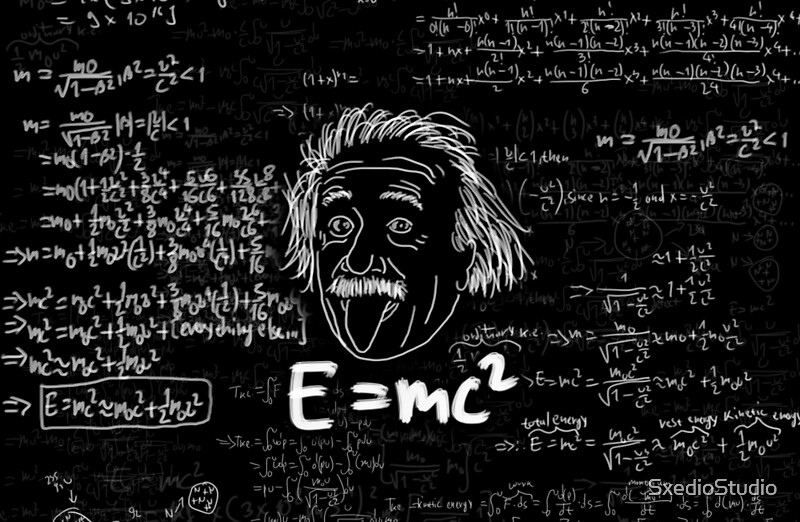
Higgs bosons obey the conservation of energy law, which states that no energy is created or destroyed, but instead can be transferred or change form. First, the energy starts out in the gauge boson that interacts with the Higgs field*. This energy is in the form of kinetic energy as movement. After the gauge boson interacts with the Higgs field, it slows down. This slowing down reduces the amount of kinetic energy in the gauge boson. However, this energy is not destroyed. Instead, the energy from the motion goes into the field and is converted into mass-energy, which is the energy stored in mass. The mass created can become what we call a Higgs boson. The amount of mass created comes from Einstein's famous equation E=mc2, which states that mass is equal to a large amount of energy (for example, 1 kg of mass is equivalent to almost 90 quadrillion joules of energy—the same amount of energy used by the entire world in roughly an hour and a quarter in 2008). Since the amount of mass-energy created by the Higgs field is equal to the amount of kinetic energy that the gauge boson lost by slowing down, energy is conserved.
(* In this section I am skipping the complex parts and detailed overview for Higgs Boson since it is a lengthy and a standalone topic which I will cover in my future blogs)
(* In this section I am skipping the complex parts and detailed overview for Higgs Boson since it is a lengthy and a standalone topic which I will cover in my future blogs)
Dark matter could also explain certain optical illusions that astronomers see in the deep universe. For example, pictures of galaxies that include strange rings and arcs of light could be explained if the light from even more distant galaxies is being distorted and magnified by massive, invisible clouds of dark matter in the foreground-a phenomenon known as gravitational lensing.
Now lets move to the other part of the topic, the Dark Energy.
DARK ENERGY
In physical cosmology and astronomy, dark energy is an unknown form of energy which is hypothesized to permeate all of the space, tending to accelerate the expansion of universe. Dark energy is the most widely accepted hypothesis to explain the observations sice the 1990s indicating that the universe is expanding at an accelerating rate.
Assuming that the standard model of cosmology is correct, the best current measurements indicate that dark energy contributes 68.3% of the total energy in the present-day observable universe. The mass–energy of dark matter and ordinary (baryonic) matter contribute 26.8% and 4.9%, respectively, and other components such as neutrinos and photons contribute a very small amount. The density of dark energy (~ 7 × 10⁻³⁰ g/cm3) is very low, much less than the density of ordinary matter or dark matter within galaxies. However, it dominates the mass–energy of the universe because it is uniform across space.
Dark Energy is a hypothetical form of energy that exerts a negative, repulsive pressure, behaving like the opposite of gravity. It has been hypothised to account for the observational properties of distant type Ia supernovae, which show the universe going through an accelerated period of expansion. Like Dark Matter, Dark Energy is not directly observed, but rather inferred from observations of gravitational interactions between astronomical objects.
Dark Energy makes up 72% of the total mass-energy density of the universe. The other dominant contributor is Dark Matter, and a small amount is due to atoms or baryonic matter.
Einstein's famous equation, E = mc2, teaches us that matter and energy are interchangeable, merely different forms of the same thing. We have a giant example of that in our sky: the Sun. The Sun is powered by the conversion of mass to energy.
SOMETHING FROM NOTHING
CAN THE DARK MATTER SHOW A LINK BETWEEN THE SMALLEST AND THE BIGGEST ?
But energy is supposed to have a source — either matter or radiation. The notion here is that space, even when devoid of all matter and radiation, has a residual energy. That "energy of space," when considered on a cosmic scale, leads to a force that increases the expansion of the universe.In physical cosmology and astronomy, dark energy is an unknown form of energy which is hypothesized to permeate all of the space, tending to accelerate the expansion of universe. Dark energy is the most widely accepted hypothesis to explain the observations sice the 1990s indicating that the universe is expanding at an accelerating rate.
Assuming that the standard model of cosmology is correct, the best current measurements indicate that dark energy contributes 68.3% of the total energy in the present-day observable universe. The mass–energy of dark matter and ordinary (baryonic) matter contribute 26.8% and 4.9%, respectively, and other components such as neutrinos and photons contribute a very small amount. The density of dark energy (~ 7 × 10⁻³⁰ g/cm3) is very low, much less than the density of ordinary matter or dark matter within galaxies. However, it dominates the mass–energy of the universe because it is uniform across space.
Dark Energy is a hypothetical form of energy that exerts a negative, repulsive pressure, behaving like the opposite of gravity. It has been hypothised to account for the observational properties of distant type Ia supernovae, which show the universe going through an accelerated period of expansion. Like Dark Matter, Dark Energy is not directly observed, but rather inferred from observations of gravitational interactions between astronomical objects.
Dark Energy makes up 72% of the total mass-energy density of the universe. The other dominant contributor is Dark Matter, and a small amount is due to atoms or baryonic matter.
Einstein's famous equation, E = mc2, teaches us that matter and energy are interchangeable, merely different forms of the same thing. We have a giant example of that in our sky: the Sun. The Sun is powered by the conversion of mass to energy.
SOMETHING FROM NOTHING
CAN THE DARK MATTER SHOW A LINK BETWEEN THE SMALLEST AND THE BIGGEST ?
Perhaps dark energy results from weird behavior on scales smaller than atoms. The physics of the very small, called quantum mechanics, allows energy and matter to appear out of nothingness, although only for the tiniest instant. The constant brief appearance and disappearance of matter could be giving energy to otherwise empty space.
It could be that dark energy creates a new, fundamental force in the universe, something that only starts to show an effect when the universe reaches a certain size. Scientific theories allow for the possibility of such forces. The force might even be temporary, causing the universe to accelerate for some billions of years before it weakens and essentially disappears.
The most important property of dark energy is that it has negative pressure which is distributed relatively homogeneously in space.
P=wc2p
where c is the speed of light and ρ is the energy density. Different theories of dark energy suggest different values of w, with w < − 1/3 for cosmic acceleration (this leads to a positive value of ä in the acceleration equation above).

One of the fascinating properties of this so called Dark Energy that it possesses an Anti-gravitational field* which is opposite in nature to gravitational force which is said to be the main cause for expansion of the universe.
EXPANSION OF THE UNIVERSE

Dark energy is even more mysterious, and its discovery in the 1990s was a complete shock to scientists. Previously, physicists had assumed that the attractive force of gravity would slow down the expansion of the universe over time. But when two independent teams tried to measure the rate of deceleration, they found that the expansion was actually speeding up.
For thousands of years, astronomers wrestled with basic questions about the size and age of the universe. Does the universe go on forever, or does it have an edge somewhere? Has it always existed, or did it come to being some time in the past? In 1929, Edwin Hubble, an astronomer at Caltech, made a critical discovery that soon led to scientific answers for these questions: he discovered that the universe is expanding.
The ancient Greeks recognized that it was difficult to imagine what an infinite universe might look like. But they also wondered that if the universe were finite, and you stuck out your hand at the edge, where would your hand go? The Greeks' two problems with the universe represented a paradox - the universe had to be either finite or infinite, and both alternatives presented problems.
After the rise of modern astronomy, another paradox began to puzzle astronomers. In the early 1800s, German astronomer Heinrich Olbers argued that the universe must be finite. If the Universe were infinite and contained stars throughout, Olbers said, then if you looked in any particular direction, your line-of-sight would eventually fall on the surface of a star. Although the apparent size of a star in the sky becomes smaller as the distance to the star increases, the brightness of this smaller surface remains a constant. Therefore, if the Universe were infinite, the whole surface of the night sky should be as bright as a star. Obviously, there are dark areas in the sky, so the universe must be finite.
But, when Isaac Newton discovered the law of gravity, he realized that gravity is always attractive *. Every object in the universe attracts every other object. If the universe truly were finite, the attractive forces of all the objects in the universe should have caused the entire universe to collapse on itself. This clearly had not happened, and so astronomers were presented with a paradox.
When Einstein developed his theory of gravity in the General Theory of Relativity, he thought he ran into the same problem that Newton did: his equations said that the universe should be either expanding or collapsing, yet he assumed that the universe was static. His original solution contained a constant term, called the cosmological constant, which cancelled the effects of gravity on very large scales, and led to a static universe. After Hubble discovered that the universe was expanding, Einstein called the cosmological constant his "greatest blunder."
Hubble's Theory
 In 1929 Edwin Hubble, working at the Carnegie Observatories in Pasadena, California, measured the redshifts of a number of distant galaxies. He also measured their relative distances by measuring the apparent brightness of a class of variable stars called Cepheids in each galaxy. When he plotted redshift against relative distance, he found that the redshift of distant galaxies increased as a linear function of their distance. The only explanation for this observation is that the universe was expanding.
Once scientists understood that the universe was expanding, they immediately realized that it would have been smaller in the past. At some point in the past, the entire universe would have been a single point. This point, later called the big bang, was the beginning of the universe as we understand it today.
The expanding universe is finite in both time and space. The reason that the universe did not collapse, as Newton's and Einstein's equations said it might, is that it had been expanding from the moment of its creation. The universe is in a constant state of change. The expanding universe, a new idea based on modern physics, laid to rest the paradoxes that troubled astronomers from ancient times until the early 20th Century.
Einstein's Cosmological Constant

Albert Einstein was the first to understand that space was not simply empty. He also understood that more space could continue to come into existence. In his theory of general relativity*, He found that his equations didn't quite work for a static universe, so he threw in a hypothetical repulsive force that would fix the problem by balancing things out, an extra part that he called the "cosmological constant."
In trying to solve the differential equations that describe space-time, Einstein needed to add a constant term to avoid having the universe collapse upon itself. This term balances the attractive force of gravity contributed by all of the matter in the universe. Physically, this term represents the "vacuum energy", the possibility that empty space possesses density and pressure, thus preventing the universe from collapsing.
Einstein included a cosmological constant to account for the stationary universe scientists thought existed. But Einstein, like all scientists at that time, did not know that the universe was expanding. After Hubble announced the expanding universe, Einstein called his constant his "biggest blunder."
Today astronomers refer to one theory of dark energy as Einstein's cosmological constant. The theory says that dark energy has been steady and constant throughout time and will remain that way.
But Einstein's blunder may be the best fit for dark energy. Predicting that empty space can have its own energy, the constant indicates that as more space emerges, more energy would be added to the universe, increasing its expansion.
the cosmological constant (usually denoted by the Greek capital letter lambda: Λ) is the value of the energy density of the vacuum of space
The cosmological constant Λ appears in Einstein's field equation in the form

where the Ricci tensor/scalar R and the metric tensor g describe the structure of spacetime, the stress-energy tensor T describes the energy and momentum density and flux of the matter in that point in spacetime, and the universal constants G and c are conversion factors that arise from using traditional units of measurement. When Λ is zero, this reduces to the field equation of general relativity usually used in the mid-20th century. When T is zero, the field equation describes empty space (the vacuum).
CONCLUSION
(* - I will be covering topics indicated by this symbol in my future blogs )
Thank You!